Google Cloud Integrates Model Context Protocol
Enterprise infrastructure adopts standardized context streams, linking Vertex AI foundational foundation models directly with governed corporate data stores.
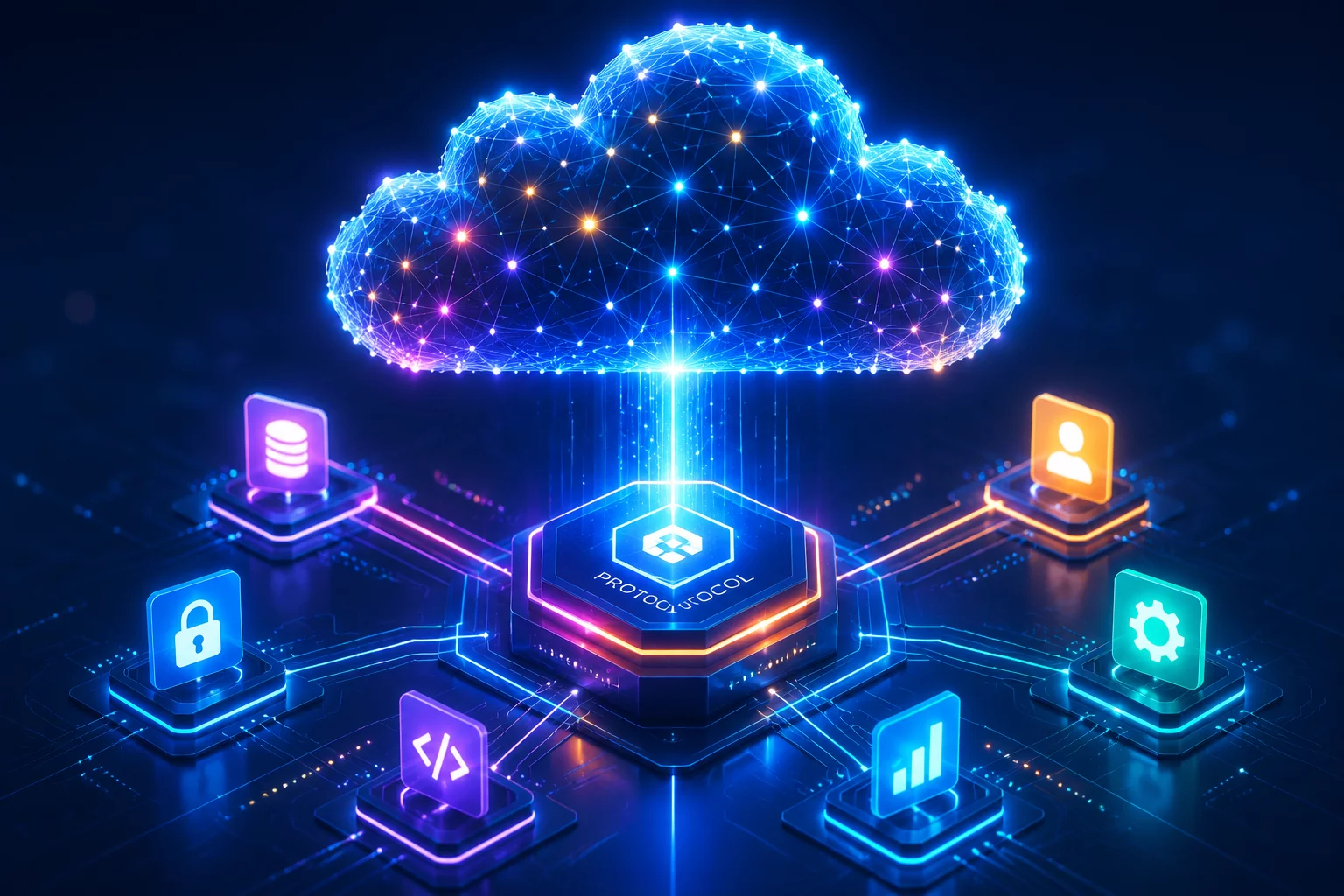
Google Cloud announced native deployment endpoints for the open Model Context Protocol (MCP) across its core Vertex AI environment. The architecture establishes a uniform channel between heterogeneous enterprise datastores, operational applications, and agentic foundation models. Engineering teams can now bypass bespoke API wrappers and unstandardized retrieval glue code in favor of schema-enforced contextual sessions.
Contextual Architecture & Integration Overview
Context preparation has consistently challenged organizations scaling generative AI across distributed cloud services. Before this protocol adoption, enterprise teams frequently lost hours building fragile serialization pipelines between BigQuery tables, Google Workspace documents, and model execution runtime environments. By integrating MCP directly into Google Cloud runtime layers, context tokens flow securely through deterministic interfaces without manual prompt rewriting or arbitrary truncation.
Protocol Schema Parameters
- Deterministic Mapping: Supports standard JSON-LD and serialized MCP schema tokens directly in Vertex AI Agent Builder.
- Memory Partitioning: Isolates session-specific states from immutable organizational prompts with granular IAM rules.
- Contextual Guardrails: Pre-execution validation checks to prevent prompt drift and enforce compliance schemas.
- Latency Benchmark: Sub-15ms parsing latency across edge endpoints and multi-region deployments.
Implementation Details
The native MCP integration establishes bidirectional data streaming between client tools and target models. When an autonomous agent queries internal knowledge bases, the protocol verifies token boundaries, injects domain taxonomies, and constructs an optimal memory frame before execution starts. Developers define structured inputs using established worksheet templates, while Google Cloud manages authentication, telemetry, and rate limits natively.
"Better context before more prompting transforms non-deterministic LLM iterations into predictable, production-grade output pipelines."
— Architecture Lead, ContextCraft Spec Team
Step-by-Step Integration Guide
- Define Schema Payload: Generate the context structure through standard ContextCraft worksheets to organize schemas and domain variables.
- Configure Endpoint Dispatcher: Route structured metadata parameters into target agent frameworks via Google Cloud Vertex MCP connectors.
- Apply Evaluation Heuristics: Validate deterministic outputs against predefined verification rules to prevent hallucinations before deployment.
By shifting operational effort from prompt manipulation to systematic context engineering, enterprises achieve consistent execution accuracy. Google Cloud's native protocol commitment demonstrates that context standardization has become foundational infrastructure for production AI systems.
Community Discussion (0)
Peer VerifiedNo comments yet. Be the first to leave a technical note.
Leave a Technical Note